Ladies, how often do you think about the lifecycle of your period pads or tampons after you’re done with them for the month? It’s not a topic most of us are excited to explore but there are some pretty compelling reasons to pay attention.
Did you know that more than 12 billion pads and 7 billion tampons are discarded each year just in the U.S.? According to the ReLoop platform, the average woman will toss out more than 330 pounds of menstrual products in her lifetime and about 90 percent of that waste is plastic — applicators, adhesives, and covers. These items go to landfills while used pads and tampons can clog municipal waste systems.
But it’s not just the waste that’s a problem there is also a great deal of controversy about what goes into feminine products. Chlorine is a harmful bleaching agent used to make those pads and tampons bright white. This pollutes our waterways and poses human health risks as chlorine creates dioxin — a known carcinogen — which can leach into the body when wearing tampons or pads. According to the EPA, there is no safe level of dioxin exposure. Frequent exposure to dioxin, such as using pads or tampons for a week or so every month, can lead to problems like hormone interruption and immunity issues.
There are other problems with disposable pads and tampons, like alcohol and dyes. Some contain rayon, a plastic-based material. And even top-selling period underwear brands, touted as a sustainable alternative to single-use products, were found to contain harmful levels of PFAS (Per- and polyfluoroalkyl substances) — “forever chemicals” linked to a range of health issues. You get the point; these products are not good for our health nor for the planet, and I don’t want that stuff near me. Plus, since the FDA does not require feminine products to list ingredients on their packaging, so we have no idea what we are getting!
But there is good news. There are clean alternatives made from natural ingredients without excess plastic or harmful chemicals. Here are some of my favorites.
Natracare: Contains certified organic cotton, ecologically certified cellulose pulp, corn starch, non-toxic glue. Plus the pad’s wrapper is comprised of compostable cellulose and compostable starch film.
Maxim: These pads and tampons are made from 100% natural and chlorine-free cotton, and their tampons are certified organic.
Seventh Generation: The ingredients in these feminine products include chlorine-free processed wood pulp, polyolefins, adhesives, silicone-coated paper
L. Leak Proof Liners: L’s liners are made from 100% US-grown pure cotton top layer and a plant-based absorbent core.
Rael: Designed by women for women, Rael says all of its products are made from clean ingredients inspired by nature, including organic cotton. Tampons include a water-repellent wax string and a BPA-Free plastic applicator.
Daye: Finally, a tampon with wrappers that are flushable and ocean-safe, They dissolve in water! Plus, the cute box is reusable so you can reduce waste there, too. The tampons are made from 100% cotton and sustainably sourced fibers and sugarcane applicators.
Cora: These 100% organic tampons include a paraffin water-repellent wax string and the applicators are made from sugar cane.
Honey Pot Pads and tampons made from 100% organic cotton and water-repellent xax strings and , BPA-Free plastic applicators.
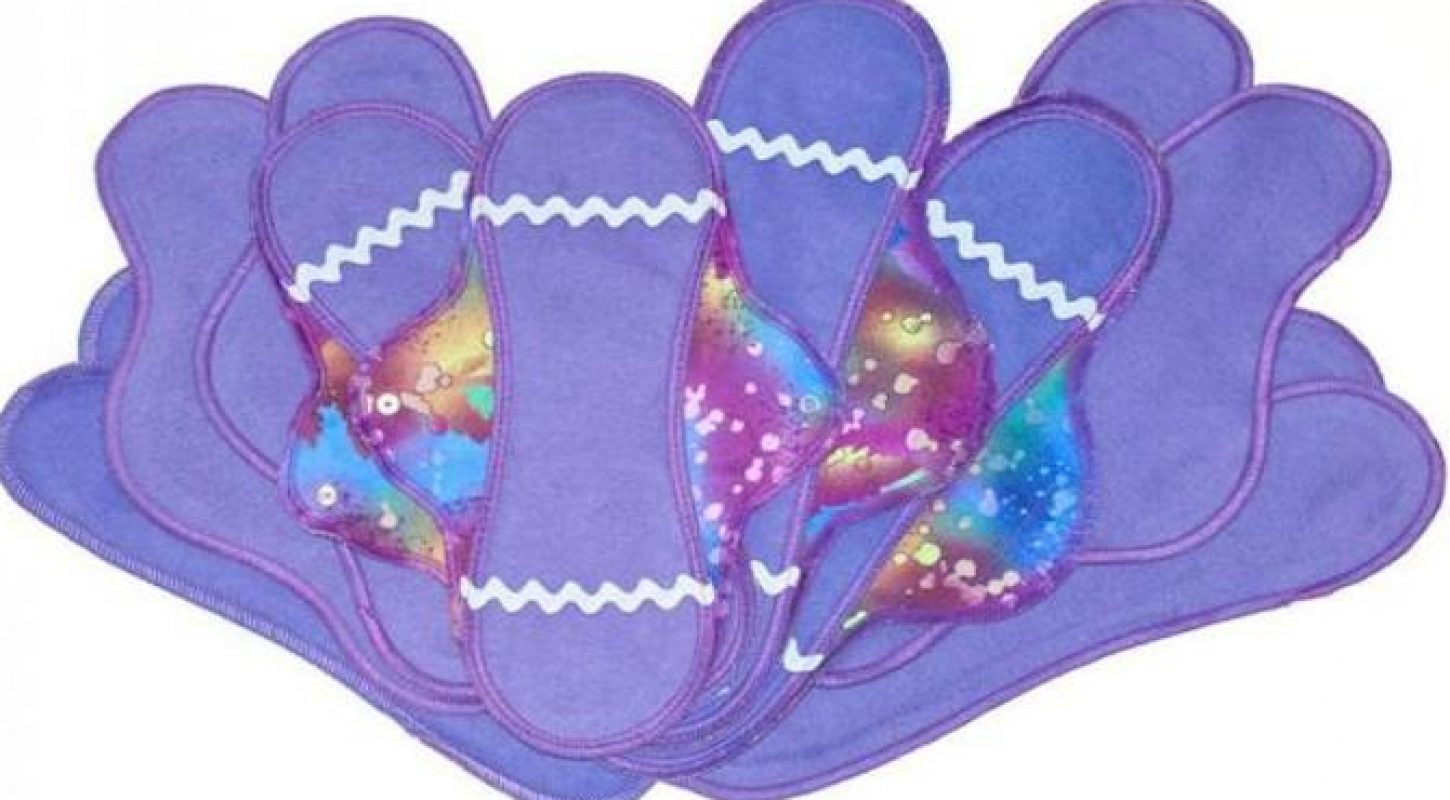
While I use disposable products when necessary, I prefer to use the slightly more pain-in-the-butt, but oh-so-much-better-for-the-environment reusable pads like GladRags or Lunapads. They are these little fabric pads that you snap around your underwear. Then you rinse and wash them and use them again. I used GladRags for so many years now but now I use Lunapads. I’m a fan of their overnight organic cotton pad and insert. Yes, it feels slightly like wearing a diaper, but let’s face it… those disposable pads do too.
Here’s what I do: I use my cloth pads, and then let them soak in the sink (I know it’s a bit gross, but it’s also awesome). After they soak, I toss them into the wash. It’s super easy. I try to use the reusable options (Lunapad maxi for day and overnight for nighttime) most often, but if I’m in a hurry or leaving the house for the day I’ll go with Natracare disposable pads with wings.
Historically I was not a tampon girl, but these days I don’t mind them as much out of necessity really, such as when I’m at events or work where I’m wearing an outfit that pads won’t work with. I’ve been using Maxim (organic cotton), I like their applicator best. I’m not a huge fan of Natracare’s organic cotton tampons because the application wasn’t a smooth experience for me.
If you prefer tampons to pads, there are also some reusable options out there such as the Diva Cup, which are reusable cups made from silicone or rubber that you wash out and can reuse for up to ten years. These catch your flow (thus the “cup”) rather than absorb it like tampons. They are supposedly popular among European ladies. I haven’t tried them, but I love the idea of these, but I have yet to use them. I think that if you like tampons, you might be into these.
But whatever you choose, here’s my bottom line – “regular” pads and tampons clog landfills, use chemicals and “virgin” paper in their production. Plus, they are bad for your body. You’re going to be using these products for about 40 years of your life, so you want something that’s gentler on your body and the planet. I say be safe and use natural products that we know are better for both.